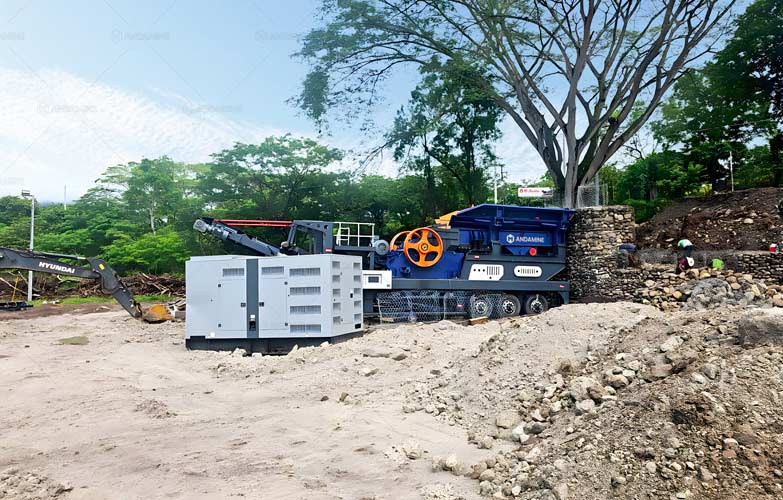
For aggregate producers and mining contractors in Latin America, controlling investment costs is just as important as increasing production capacity. Many projects require different crushing configurations as production demands change, making equipment flexibility a major purchasing consideration. This is why a mobile crushing plant has become an increasingly attractive solution for contractors working in road construction, quarrying, recycling, and mining.
Instead of purchasing multiple independent machines for different applications, modular mobile equipment allows operators to adapt one production system to several working conditions. Whether producing aggregates for highways or supplying materials for concrete plants, customers can improve equipment utilization while reducing total ownership costs. Even companies searching for stone crusher Chile solutions or supporting grinding systems with an industrial ball mill are increasingly considering modular crushing technology as part of an integrated production line.
Why Modular Design Is Becoming the Preferred Choice
Traditional crushing lines are often designed for a single application. Once production requirements change, operators may need to purchase additional crushers or redesign the entire process. A modular mobile crushing plant(planta de trituración móvil) solves this challenge by allowing different crushing and screening modules to be combined according to project requirements.
One Platform, Multiple Configurations
Most modular systems can support various equipment combinations, including:
- Jaw crusher with vibrating feeder
- Impact crusher with screening unit
- Cone crusher with screening plant
- Multiple-stage crushing systems
- Sand-making modules
Instead of replacing the complete machine, customers only adjust the working modules to match new production targets.
Adapt to Different Materials
The same equipment platform can process a wide variety of materials, including:
- Granite
- Basalt
- Limestone
- River stone
- Construction waste
- Recycled concrete
This flexibility significantly improves equipment utilization throughout its service life.
How Modular Design Saves the Cost of Two Machines
One of the biggest financial advantages of modular equipment is eliminating duplicate investments while keeping production flexible.
Reduced Initial Investment
Without modular equipment, a contractor may need to purchase separate machines for primary crushing, secondary crushing, and recycling applications. A modular mobile crushing plant combines these functions into one expandable platform, reducing unnecessary equipment purchases and lowering capital investment.
Lower Transportation Expenses
Transporting heavy stationary equipment between job sites can be expensive and time-consuming. Modular mobile units feature integrated chassis and quick-disconnect components, allowing relocation with fewer transport vehicles and shorter preparation times. This is particularly valuable for contractors working across multiple regions in Latin America.
Less Idle Equipment
Many contractors experience low equipment utilization because different projects require different crushing processes. With interchangeable modules, one machine can serve several projects throughout the year, reducing idle time and improving return on investment.
Applications Across Latin America
Different countries present different production challenges, making equipment flexibility even more valuable.
Road Construction Projects
Infrastructure contractors frequently move between highway sections. A mobile crushing plant can produce base materials directly near construction sites, reducing aggregate transportation costs while maintaining continuous production.
Quarry Operations
Quarries often process multiple rock types during different seasons. Instead of investing in dedicated production lines, modular equipment allows operators to switch crushing modules according to material hardness and desired product size.
Recycling Projects
Urban demolition continues to expand across Latin America. Modular impact crushing units can quickly convert concrete waste into reusable aggregates, creating additional revenue streams without purchasing separate recycling equipment.
A Practical Example
Consider a contractor that begins with a highway construction project requiring coarse aggregates.
The initial configuration includes:
- Jaw crusher
- Vibrating feeder
- Conveyor system
Six months later, the same contractor wins a concrete aggregate contract requiring finer materials.
Rather than purchasing another crusher, the company simply adds:
- Cone crusher module
- Screening module
Later, if the contractor enters recycling projects, an impact crusher module can replace the cone crusher depending on production needs.
The result is one equipment platform serving several businesses that would traditionally require two or three independent crushing plants.
Supporting Complete Aggregate Production Lines
A crushing plant rarely works alone. Many aggregate producers integrate modular crushing systems with other processing equipment to create complete production lines.
Typical supporting equipment includes:
- Vibrating screens
- Sand washing systems
- Belt conveyors
- Dust collection equipment
- Industrial ball mill(molino de bolas industrial) systems for ultra-fine grinding applications
This integrated approach improves material flow while reducing operational interruptions.
For companies evaluating stone crusher Chile(chancadora de piedra Chile) investments, selecting equipment that can expand alongside future production plans often delivers better long-term value than purchasing fixed-purpose machinery.
Key Benefits Beyond Equipment Savings
Cost reduction is only one advantage. Modular equipment also delivers several operational improvements that help contractors stay competitive.
Faster Project Deployment
Factory-preassembled modules reduce installation time, allowing production to begin much sooner than traditional stationary plants.
Easier Maintenance
Standardized modules simplify maintenance planning because many components are interchangeable. Replacement parts are easier to manage, reducing inventory requirements.
Greater Investment Security
Market demand changes frequently. Instead of replacing entire production lines, operators can upgrade individual modules as technology evolves or production targets increase. This protects the original investment while extending equipment service life.
Choosing the Right Modular Configuration
Every project has unique production requirements, so equipment selection should begin with a careful evaluation of several factors:
- Material hardness
- Required production capacity
- Finished aggregate sizes
- Site relocation frequency
- Future expansion plans
- Local transportation conditions
Contractors expecting frequent project changes generally benefit from highly modular configurations, while long-term quarry operations may choose semi-mobile layouts that balance mobility with higher throughput.
Increase Long-Term Value with Modular Crushing Solutions
The mining and aggregate industries across Latin America continue to demand equipment that delivers higher productivity with lower operating costs. A modular mobile crushing plant helps contractors meet these expectations by combining multiple crushing functions into one adaptable system. Instead of investing in separate machines for every new project, operators can reconfigure existing equipment, improve utilization, and respond more quickly to changing market opportunities. Whether supplying road construction projects, expanding quarry production, or supporting stone crusher Chile operations alongside an industrial ball mill, modular design provides a practical strategy for maximizing both operational efficiency and long-term investment value.

Comments
No comments yet. Be the first to react!